
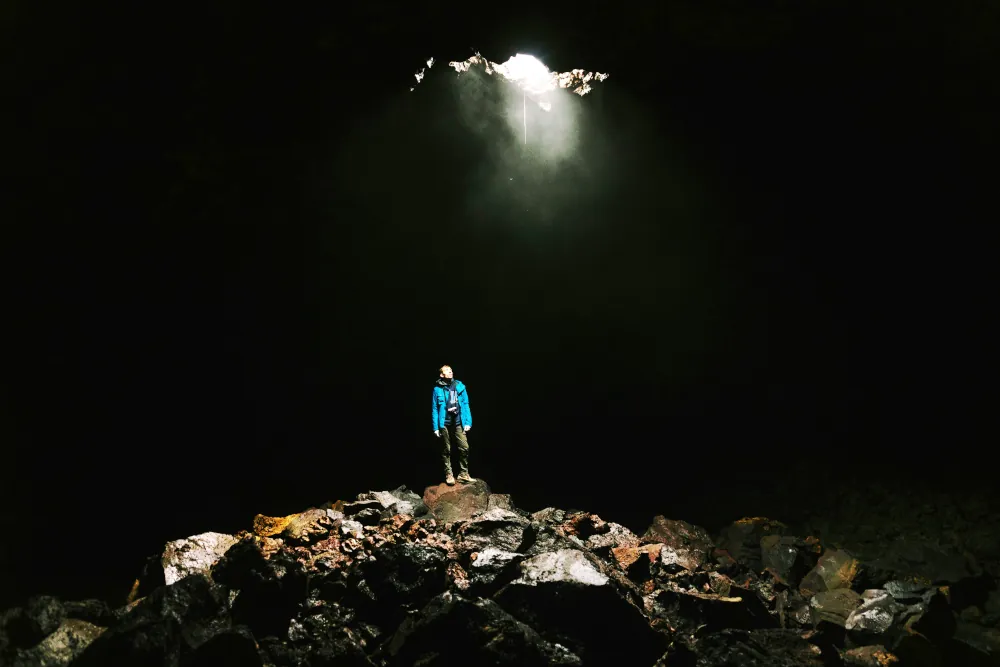
Imagine being sent back in time to live with a tribe of cavemen, people who have never learned to share or cooperate. No food would be saved for those who fall ill, no one would care for the injured, and every person would guard their resources with suspicion. In such a world, survival would be brutal.
Naturally, you’d want to teach them a better way: sharing, harmony, cooperation. You’d gather them in a circle, pass food around, tell stories of how trust could transform their lives. They might smile. They might enjoy the exercise. But would they understand?
Not really.
When Beliefs Block Progress
Despite your efforts, most cavemen wouldn’t apply the lessons. One might leave food to share, only to watch someone else take it without thanks. Another might reveal his secret fishing spot, only to find it emptied by others. The conclusion? “Sharing doesn’t work.”
From their view shaped by fear and scarcity, your ideas don’t make sense. They don’t see you as a teacher. They see you as a problem.
This disconnect isn’t about intelligence. It’s about mental position, a concept central to The Human Equation. These cavemen are stuck at the bottom of the metaphorical mountain, seeing only what’s right in front of them. You, with your experience and perspective, are standing higher, able to see the whole landscape.
What you offer isn’t wrong it’s just outside their belief system.
The Real Problem: Belief Systems
“The real problem they have is not with our concepts… it’s with their belief system.”
This statement strikes at the heart of human struggle. People don’t resist good ideas because the ideas are flawed. They resist because those ideas challenge their deeply ingrained beliefs.
The cavemen aren’t bad. They’re not hopeless. They’re just trapped in a system of thought that blinds them to possibility.
This is why, throughout history, the greatest philosophers, humanitarians, and spiritual teachers were rejected or worse. Their ideas didn’t align with the dominant belief systems, so they were seen as threats, not guides.
And this happens today.
Building a New Cave
So you leave the first cave and find a new one. You start over with those willing to learn. Maybe it’s children, who haven’t yet solidified their beliefs. Maybe it’s outcasts, or the curious. Together, you build a new way of life based on cooperation, empathy, and self awareness.
Slowly, everything changes.
– Trust grows.
– Conflicts decrease.
– People care for one another.
– Meaning deepens.
The belief system shifts and with it, so does the quality of life.
People begin to see with insight. They no longer react to life; they relate to it. They don’t just follow rules; they understand their purpose.
Keep Growing
New ideas are how belief systems grow, and a thoughtful book is a good place to find them.
Browse Self Improvement Books on AmazonAs an Amazon Associate I earn from qualifying purchases. Your price stays the same, and any commissions help cover the costs of running humanequation.org.
Two Caves, Two Realities
Let’s compare the two caves.
In the first cave, aggression and arrogance go unnoticed. Sarcasm, ego, and quick tempers are mistaken for leadership. Fads dominate. Trends overwhelm. Problems multiply.
In the second cave, those same traits are seen as philosophical errors. They are recognized as harmful. Wisdom is valued. Emotional maturity is respected. Challenges are addressed early before they spiral out of control.
The difference? Belief systems.
It’s not about having better tools, more resources, or superior intelligence. It’s about how people see and how they choose to live based on what they see.
We See with Our Beliefs
“We don’t see with the eyes, we see with our belief system, our quality of being. We see with insight.”
This is the moral of the story.
Your beliefs don’t just influence your thinking. They shape your reality.
– They determine what you accept.
– They define what you defend.
– They blind you to what doesn’t fit.
This is why some people suffer from endless tension, stress, and conflict while others live with harmony and meaning. It’s not the environment. It’s the lens.
The Path to Freedom
What makes the second cave so powerful isn’t perfection. It’s awareness.
The people in that cave don’t follow trends blindly. They don’t idolize aggression. They don’t wait for problems to grow. They are committed to understanding life and themselves.
And because of that, they live better.
They don’t just survive. They thrive.
They don’t just cope. They connect.
They don’t just see. They see with insight.
Final Reflection: Which Cave Are You In?
Every person is building a cave, a personal environment created by their values, habits, and most of all, beliefs.
So ask yourself:
– Am I reacting to life, or responding with clarity?
– Do I challenge my own assumptions or defend them blindly?
– Am I open to growth, or clinging to comfort?
You don’t need to start over. You don’t need to be perfect. But if you want to build your own “second cave”, a life of peace, awareness, and insight, it starts with a simple choice:
Expand your belief system.
Because when you change the way you see, you change everything.
Photo Credit: https://www.pexels.com/@arthousestudio/
Related Post



© 2026 Sonic Discovery, LLC | The Human Equation Tapes
Privacy | Terms | Disclaimer | Return Policy | Community Forum
5020 Clark Rd STE 109 Sarasota, FL 34233