
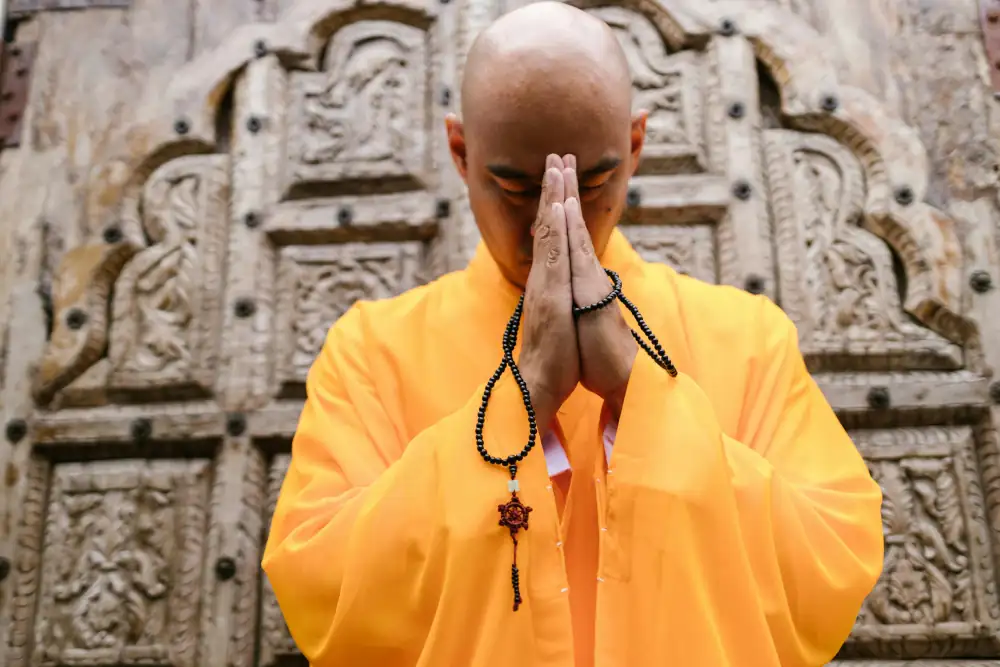
Throughout history, the greatest minds have delivered the same message in different forms: Know yourself. Expand yourself. Grow from within. From ancient Greek philosophers to modern psychologists, the call for inner development has echoed across time, cultures, and traditions. Why? Because wisdom not knowledge alone is what transforms a life from merely existing into truly living.
The Timeless Call to Know Yourself
“The unexamined life is not worth living.” These words from Socrates are as relevant today as they were thousands of years ago. Confucius, Gandhi, and Albert Schweitzer all emphasized ethical, internal progress as the true path to personal and societal advancement. Carl Jung, Abraham Maslow, and Erich Fromm carried that message into modern psychology, teaching that fulfillment and self-actualization come from understanding and developing our inner world.
Yet, in the modern world, many ignore this timeless wisdom. We live in an age of distraction, consumption, and external validation. We have more information, gadgets, and entertainment than ever before but less connection, less clarity, and less peace.
Why?
Because people are externalizing. They’re focused on what they have, not on who they are. And in doing so, they risk the greatest tragedy of all: reaching the end of their lives only to realize they never really lived.
Knowledge Isn’t Enough—Wisdom is What Matters
There’s a difference between being smart and being wise. You can have degrees, credentials, and accolades and still be unkind, reactive, shallow, or self centered.
True wisdom shows up in how we treat others. It’s reflected in humility, integrity, resilience, and compassion. A wise person may not have many possessions, but they have peace. They may not hold power, but they wield deep influence.
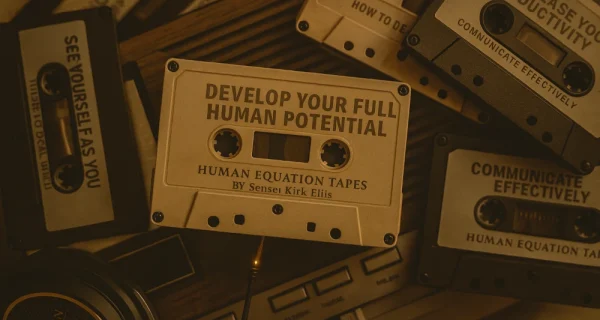
As The Human Equation teaches:
“It’s better to have a higher level of understanding life and have little, than it is to have power and riches and live without wisdom.”
This is not an argument against knowledge. Rather, it’s a reminder that inner development must match outer success. Otherwise, we risk building empires on shaky ground achieving goals without understanding ourselves, and winning at life while feeling empty inside.
The Illusion of Material Comfort
Our culture equates progress with material achievement. Comfort, convenience, and wealth are treated as the benchmarks of success. But as this tape so clearly points out:
“Material possessions do not eliminate stress, nervousness, fear, anxiety, resentment, envy, jealousy, worry, agitation, or hostility.”
We see it every day. People who “have it all” still suffer from anxiety, depression, and relational dysfunction. The solution isn’t more things, it’s clarity, meaning, and growth.
Happiness and contentment don’t come from the outside. They’re cultivated through awareness, insight, and the daily practice of living from your values. That’s wisdom in action.
Expanding Your Belief System: The True Path to Growth
Your belief system is the framework through which you see and interpret everything yourself, others, success, pain, and even love. Most people live their entire lives without ever questioning it.
But what if your belief system is outdated? What if it was built by fear, shaped by culture, or inherited without reflection?
That’s where transformation begins: with the courage to question yourself, not to criticize, but to evolve.
“Success with life is determined by our inner growth.”
Expanding your belief system means becoming more flexible, open, and self aware. It’s the difference between reacting and responding. Between seeing with judgment and seeing with insight.
Leadership Without Wisdom is Dangerous
Whether you’re a manager, a parent, or a world leader, your beliefs affect others. And when leadership is fueled by fear, ego, or ignorance, the results are always destructive.
Too often, power is handed to those with no training in human behavior or emotional maturity. They “get tough,” demand obedience, and operate from scarcity. Their goal is to dominate, not to develop.
But true leadership, wise leadership is different.
“The goal of wise leadership is to be mature in thought, to be inspirational, and to help others grow together.”
Great leaders don’t just focus on tasks. They focus on people. They understand that every moment, every challenge, meeting, and conversation is an opportunity to elevate someone else.
They ask:
– How can I bring out the best in others?
– How can I build a team that grows together?
– How can I use my position to promote wisdom and learning?
And in doing so, they don’t just get results, they build legacy.
Two Goals in Every Moment
Every experience contains two goals: the outer task, and the inner opportunity for growth.
– A business deal isn’t just a transaction, it’s a opportunity to expand your integrity.
– A disagreement isn’t just conflict, it’s a chance to practice empathy and clarity.
– A leadership role isn’t just responsibility, it’s a platform for inspiration.
When you live with this awareness, every moment becomes sacred. Every day becomes a classroom. Every person becomes a teacher or a student or both.
Keep Growing
The wisest people never stop learning. A good book is one of the simplest ways to keep expanding your belief system.
Browse Self Improvement Books on AmazonAs an Amazon Associate I earn from qualifying purchases. Your price stays the same, and any commissions help cover the costs of running humanequation.org.
Cultures That Prioritize Growth
What if we built families, companies, and cultures around this philosophy?
– Where self-awareness is more valued than status.
– Where wisdom is cultivated as intentionally as strategy.
– Where leaders are trained not just in metrics but in mindset.
“Managers, parents, leaders, organizations, or cultures will only find enduring success when they elevate the worth of themselves and others.”
This is what it means to create a conscious culture. One where outer success and inner development go hand in hand. Where doing and being are not in conflict but in harmony.
Becoming the Leader of Your Own Life
You don’t have to run a company to be a leader. You lead your life. You influence everyone you encounter. You are responsible for the climate you create in your relationships, your habits, your thoughts.
So lead well.
– Make growth your goal.
– Make wisdom your foundation.
– Use every challenge as a stepping stone to a better version of yourself.
“Use each task, each business transaction, each friendship or moment to improve yourself and grow with others.”
This is not just philosophy. It’s practical. It changes the way you wake up in the morning, the way you treat others, the way you handle stress, and the way you make decisions.
Final Reflection: The Human Equation in Action
What matters most is not what you have, but who you’re becoming.
– Are you examining your life?
– Are you questioning your beliefs?
– Are you expanding your view of what’s possible?
– Are you leading yourself and others with wisdom?
Because in the end, your Human Equation equals your values multiplied by your beliefs, which determines everything you will experience.
It shapes your health, your happiness, your relationships, and your ability to thrive in a chaotic world.
So be courageous. Be intentional. Be wise.
And keep growing because the future you’re building depends on it.
Photo Credit: https://www.pexels.com/@rdne/


Related Post






© 2026 Sonic Discovery, LLC | The Human Equation Tapes
Privacy | Terms | Disclaimer | Return Policy | Community Forum
5020 Clark Rd STE 109 Sarasota, FL 34233