
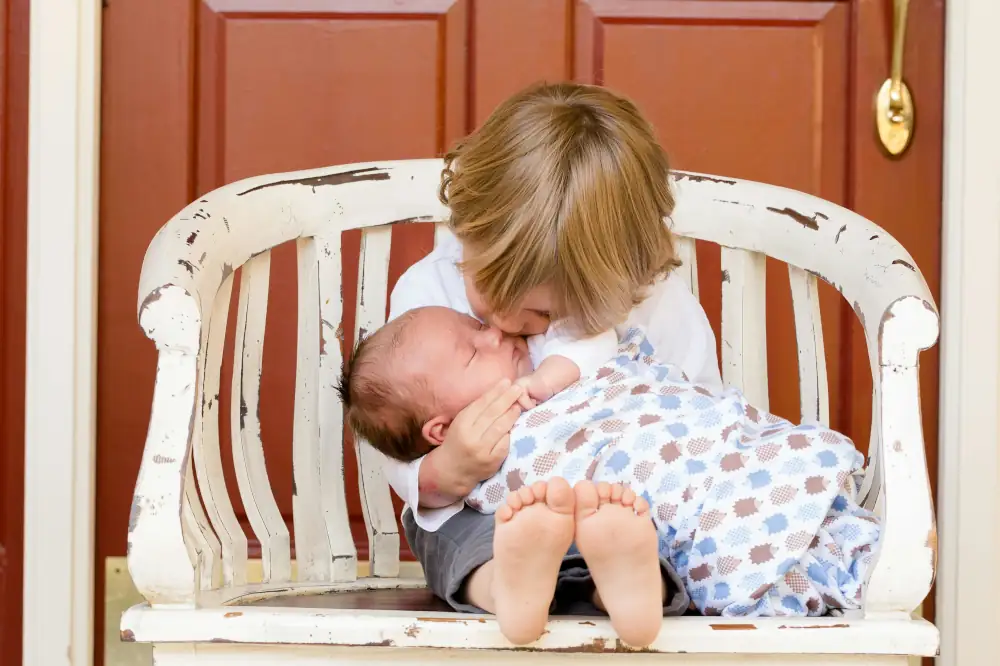
Treat children like children, and give them love and care, but treat them as if they are managers. Let them manage as much of their life as they can, in a fun way.
Raising a child isn’t just about guiding their behavior, it’s about empowering their potential. According to The Human Equation Tapes, our role as parents and families is not just to protect, but to prepare. Not to control, but to cultivate. The foundation of this begins with trust, respect, and treating children not as helpless dependents, but as developing leaders of their own lives.
Natural Confidence Is Already There
“When you were a child and you were learning to walk… you kept trying. The natural self confidence was already there.”
Children are born with an innate drive to grow, to explore, and to rise again after each fall. That persistence isn’t something we have to teach, it’s something we have to protect.
Unfortunately, as we age, we tend to bury that confidence beneath “depression stories”, negative narratives we tell ourselves when we stumble or feel uncertain.
As parents, our job is to help children maintain their connection to this natural confidence. Encourage them to try, to fail, to try again—and never to define themselves by the outcome.
Blending Caution with Courage
“Blend caution with your natural self confidence, and eliminate your depression stories.”
This is a life lesson for all ages: confidence doesn’t mean charging ahead recklessly. It means trusting yourself, while still learning when to pause, observe, and re calibrate.
Think of life as a ski slope. We all begin on the beginner hill. But eventually, if we’re honest with ourselves, we know when it’s time to try the next level. Teaching children to recognize what they can handle, and when to challenge themselves, builds both courage and wisdom.
“Don’t get stuck on the same hill for the rest of your life, and don’t rush the next hill too soon.”
It’s not about pressure, it’s about progress.
Harmony Between Order and Adventure
“You had better be adventurous, but find solitude in those things in which you have already accomplished.”
Life is a dance between movement and stillness. Between discipline and freedom. A child and an adult needs both.
– Time to explore, fail, and grow.
– Time to rest, reflect, and feel secure.
Raising a child isn’t about rigid structure or endless freedom, it’s about teaching balance. Order creates safety. Variety builds resilience. Together, they create a human being who can navigate complexity with clarity.
The Power of Intuition and Experience
“There is also a part of us that is intuitive… it’s this intuitive part of ourselves that allows us to grasp a unique feeling for each person, place, or thing.”
Modern education often focuses on data, performance, and logic. But intuition, the subtle wisdom that comes from deep listening and real experience is just as important.
Teach children to feel. To taste life, not just study it. To trust their own experiences, not just what they’re told.
The same way you can’t truly understand the difference between orange juice and milk without tasting them, kids (and adults) must engage with the world directly to understand it.
“Be analytical and also learn from experiencing each moment.”
Don’t Serve Things—Use Them
“External things are only objects for you to use, not to serve.”
This is one of the most important lessons a family can instill.
We live in a world of possessions, labels, and distractions. But none of them define who we are unless we allow them to.
Help your children and yourself, remember this: You are not the servant of your phone, your job, your image, or your fears.
They are tools. Use them with care. But never let them own your emotions or direct your self-worth.
Keep Growing
Raising confident children is a journey we share with them. A good book on personal growth can help you keep growing alongside them.
Browse Self Improvement Books on AmazonAs an Amazon Associate I earn from qualifying purchases. Your price stays the same, and any commissions help cover the costs of running humanequation.org.
Mental and Emotional Balance Is the Goal
“Work in harmony with external events and people, but make sure that you keep your mental and emotional balance.”
At the heart of every meaningful life is balance, the ability to stay grounded even when life moves fast or feels uncertain.
Teach this early, live it often:
– Take responsibility, but don’t self-destruct for perfection.
– Care for others, but don’t betray yourself.
– Enjoy success, but don’t worship it.
Let children manage as much of heir own emotions, goals, and relationships as possible. It might not be not perfect, but it is purposeful. Let them practice self leadership in fun, safe, and age appropriate ways.
Final Thought: Parenting With Purpose
When you give children love, care, and a chance to manage their own lives in small, meaningful ways, you’re teaching them how to be powerful from the inside out.
– You’re building thinkers and feelers.
– You’re raising resilient, aware, compassionate leaders.
– You’re preparing them not just for tasks, but for *life.*
Because parenting isn’t always about control, it’s about conscious guidance.
Let your children grow, and also grow with them.
Photo Credit: https://www.pexels.com/@pixabay/


Related Post






© 2026 Sonic Discovery, LLC | The Human Equation Tapes
Privacy | Terms | Disclaimer | Return Policy | Community Forum
5020 Clark Rd STE 109 Sarasota, FL 34233