


Imagine standing at the base of a vast mountain, surrounded by thick forest. The trees are tall and dense. You look out toward the horizon, but your view is blocked. All you see is bark, brush, and the dim light filtering through the leaves. You can’t see the sun rise. You can’t see the shape of the land around you. You’re limited—not because of who you are, but because of where you are.
This is the metaphor at the heart of The Human Equation: a clear and powerful image that explains why some people struggle to understand themselves or life—while others seem to perceive with clarity, wisdom, and peace.
Let’s explore this mountain—and what it means to climb it.
The Forest and the Fog
“If we were to stand at the bottom of the mountain and look toward the horizon, we wouldn’t be able to see very far because of the forest… our understanding of the surrounding area would be very limited.”
This image is more than poetic—it’s practical. It captures the reality that mental perspective is everything.
Many people feel trapped or confused, not because life is unfair, but because they are mentally stuck at the base of the mountain. Their vision is blocked by emotional habits, limiting beliefs, unresolved fears, cultural noise, or past trauma.
Just like the trees obscure the horizon, these internal blocks obscure truth.
– A person stuck in fear can’t clearly see opportunity.
– A person bound by resentment can’t experience real connection.
– A person clinging to outdated beliefs can’t perceive growth.
This explains why two people can live through the same situation—yet one grows while the other withers. It’s not the situation. It’s the mental position.
Gaining Perspective: The Middle of the Mountain
“But if we walked up to the middle of the mountain, we could see over the top of the trees… we could experience the sunrise and distant horizon.”
Climbing higher symbolizes growth.
When you reflect. When you challenge your thinking. When you question your assumptions. When you cultivate positive values. These are the steps that carry you up the mountain.
From the middle elevation:
– You begin to see cause and effect.
– You see how your past shaped your present.
– You understand that your interpretation matters as much as the event itself.
You gain insight—not perfect, but clearer.
This new perspective expands your emotional range. You don’t react so quickly. You become more thoughtful. You begin to see that other people are also climbing their own mountains.
Empathy grows.
So does wisdom.
The Summit: True Awareness
“Then if we were to walk up to the top of the mountain… We would see, hear, and experience the mountain completely differently…”
At the summit, the view is breathtaking.
You no longer just see the trees—you see the forest, the sky, the stars. You see how everything connects. You see the **patterns** of life. You understand not just your life, but life itself.
This is the view of holistic understanding.
– You experience both sunrise and sunset—the full cycle of things.
– You begin to perceive beyond personal drama.
– You accept pain without being consumed by it.
– You witness beauty in small moments.
And most of all, you understand yourself—not just as a role or personality, but as a being capable of depth, growth, and peace.
This is not perfection. It’s not about “arriving” once and for all.
It’s about seeing clearly.
Why People Struggle to Understand Themselves
“The mountain represents life and everyone is on the mountain. Everyone has a mental position… and depending upon our mental position, that’s what we are able to see, hear, and experience.”
This is why so many people feel stuck. They judge themselves—or others—without recognizing *where* they are standing.
Imagine trying to explain the sunset to someone deep in the forest who’s never seen the sky.
If they dismiss the idea, it’s not because they’re bad or broken. It’s because their perspective is limited.
This is not an insult. It’s a call to climb.
And climbing, in this case, means being willing to:
– Acknowledge your limitations
– Question your thinking
– Learn from others
– Choose humility
– Seek clarity
Real-Life Examples of Mental Position
– A child believes their parent is invincible. As they grow, they realize their parent is human. The mental position has changed.
– An employee sees their job as a dead end. But after learning new skills and receiving mentorship, they realize their job is actually a foundation. The position has shifted.
– A person who once viewed themselves as a victim reclaims their power through therapy and reflection. They’re not at the base anymore—they’ve climbed.
Each change of belief, each shift in value, is a step up the mountain.
The Role of Beliefs in Shaping Experience
“To improve our ability to make decisions and to get a better understanding of life, we must climb up higher on the mountain.”
Beliefs are the mental scaffolding that hold our position.
If you believe:
– “Life is against me,” you will see obstacles everywhere.
– “I am capable of change,” you will see new possibilities.
– “People are doing the best they can,” you will relate with more compassion.
These beliefs are not random—they are chosen, repeated, reinforced.
And they determine your *view*.
So if you want to experience a better life, you don’t have to change the world—you have to change your mental altitude.
Why the Climb Is Worth It
When we climb the mountain, everything changes—not because the world changed, but because *we* did.
– At the base, we fight everything.
– In the middle, we begin to understand.
– At the top, we experience peace.
From the top, decisions come from clarity. Relationships come from love. Action comes from wisdom. And understanding comes from a place that includes all levels—not just the view from your own window.
This is what it means to live wisely. To see holistically. To embrace complexity without confusion.
And the beautiful part?
You can start climbing today.
Final Reflection: Where Are You Standing?
We are all somewhere on the mountain. And where you stand determines how you see, how you feel, and how you live.
So ask yourself:
– Am I stuck in the trees, seeing only problems?
– Have I reached the middle, gaining insight but still unsure?
– Or am I glimpsing the summit, where love, truth, and clarity await?
You don’t have to judge yourself for where you are. But you do have the power to climb.
And every step upward is a step toward seeing life as it truly is—whole, beautiful, and always full of possibilities.
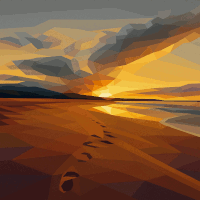
Photo Credit: https://www.pexels.com/@ridvan-ayrik-306414752/


Related Post


-
Personal Growth,Self Awareness

-
Self Awareness,Values & Your Human Equation




© 2026 Sonic Discovery, LLC – The Human Equation Tapes
Privacy | Terms | Disclaimer | Return Policy
5020 Clark Rd STE 109 Sarasota, FL 34233